




Delhi Metro Phase IV – Routes, Stations And Latest Updates
Updated on : 07 November, 2025
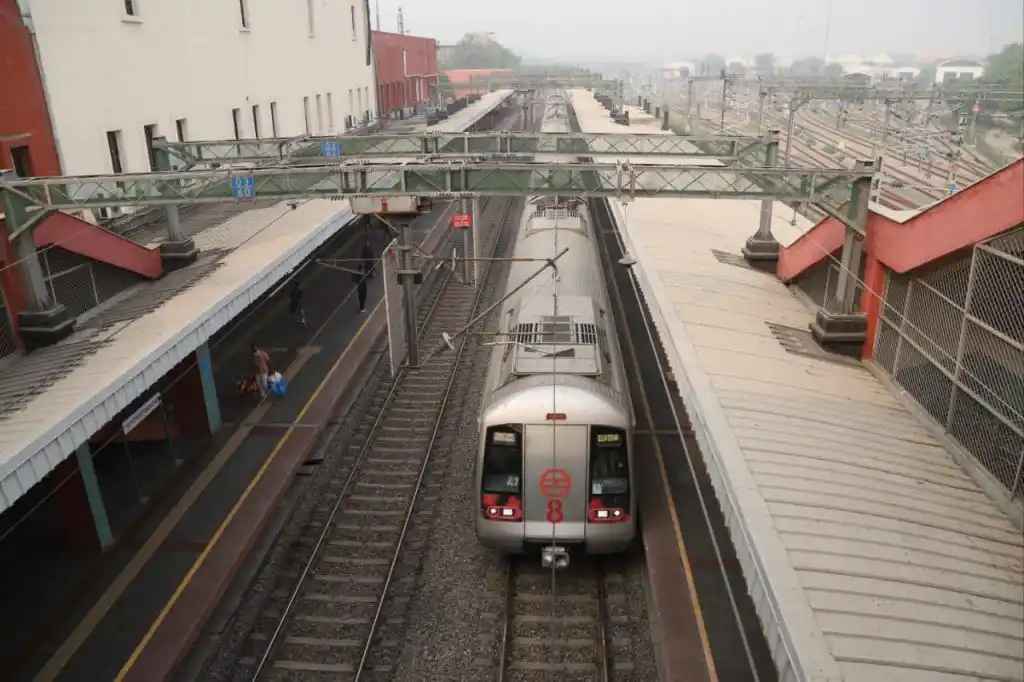
Image Source: google.com
Table Of Contents

Introduction
Delhi Metro Phase IV marks a major expansion of the city’s metro network, adding new corridors and stations to enhance connectivity across Delhi. The project aims to reduce traffic congestion, improve public transport, and make daily commuting faster and more convenient.
Image Source: Google
Delhi Metro Phase IV – Routes, Map & Key Updates 2025 | Click to Download App Available On
Overview of Delhi Metro Phase IV
| Aspect | Details |
|---|---|
| Overview | Delhi Metro Phase IV is a major expansion project aimed at improving connectivity across Delhi by adding new corridors and extending existing lines to underserved areas. |
| Total Corridors | Six new corridors covering approximately 65 kilometers, connecting key regions such as Rithala–Bawana–Narela, Janakpuri West–RK Ashram, and Tughlakabad–Aerocity. |
| Implemented By | Delhi Metro Rail Corporation (DMRC) with support from the Government of Delhi and the Government of India. |
| Objective | To reduce traffic congestion, provide sustainable urban transport, and enhance last-mile connectivity for millions of commuters. |
| Project Timeline | Approved in 2019, construction began in 2020, with phased completion expected between 2025 and 2026. |
| Key Highlights | Improved accessibility to major residential and commercial hubs, eco-friendly infrastructure, and integration with other transport modes like buses and airports. |
Explore Properties in Delhi
- Builder Floors for Sale in New Ashok Nagar
- Builder Floors for Sale in Chhatarpur
- Builder Floors for Sale in Molar Band
- Builder Floors for Sale in Hari Nagar
- Builder Floors for Sale in Vikas Puri
- Builder Floors for Sale in Uttam Nagar
New Corridors and Routes
| Corridor | Details |
|---|---|
| Janakpuri West – RK Ashram Marg | Extension of the Magenta Line covering about 28.9 km with 22 stations, improving connectivity between West Delhi and Central Delhi. |
| Mukundpur – Maujpur | A 12.6 km corridor connecting the Pink Line’s loop, creating better inter-line connectivity across North and East Delhi. |
| Aerocity – Tughlakabad | A 23.6 km Silver Line linking the airport area with South Delhi, reducing travel time between key commercial and residential zones. |
| Rithala – Bawana – Narela | Proposed 22.9 km corridor in North Delhi aimed at extending metro services to outer regions and industrial hubs. |
| Inderlok – Indraprastha | A 12.4 km link connecting existing lines to improve network efficiency and provide alternate routes to Central Delhi. |
| Lajpat Nagar – Saket G Block | A short 8 km stretch enhancing access between South and Central Delhi areas, easing road congestion significantly. |



Stations and Connectivity
| Aspect | Details |
|---|---|
| Total Stations | Delhi Metro Phase IV will include over 45 new stations across six corridors, strategically located to connect residential, commercial, and industrial areas. |
| Major Interchange Points | Key interchange stations include RK Ashram Marg, Aerocity, Lajpat Nagar, and Mukundpur, linking new corridors with existing metro lines. |
| Connectivity | The new routes will enhance connectivity between North, South, East, and West Delhi, as well as adjoining NCR regions. |
| Airport Access | The Aerocity–Tughlakabad corridor will provide a direct link to Indira Gandhi International Airport, improving travel convenience for passengers. |
| Integration with Other Transport | Seamless integration with buses, Delhi Airport Metro Express, and regional rail networks for efficient last-mile connectivity. |
| Commuter Benefits | Reduced travel time, better accessibility to key hubs, and a more comfortable and reliable public transport experience. |
Delhi Metro Phase IV Expansion – New Corridors, Deadlines & Stations | Click to Download App Available On
You Might Also Like

Sanjeeva Reddy Nagar, Hyderabad: Gateway to Modern Living!
on February 12, 2025

Lulu Mall in India - Complete List of Lulu Malls, and Key Facts
on December 26, 2024

Grow & Care for Blue Passion Flower Plant (Passiflora Caerulea)
on September 28, 2024

Upper Indira Nagar, Pune: A 2025 Guide for Buyers & Investors
on February 05, 2025

Top 26 Cleanest Cities in India 2025: A Comprehensive Guide
on January 23, 2025
Construction Progress and Timeline
| Aspect | Details |
|---|---|
| Project Approval | Delhi Metro Phase IV was approved in 2019 by the Government of India and the Delhi Government. |
| Construction Start | Physical construction began in 2020, with multiple corridors being developed simultaneously. |
| Current Progress | As of 2025, significant progress has been made on major corridors like Janakpuri West–RK Ashram and Aerocity–Tughlakabad, with several stations nearing completion. |
| Challenges Faced | The project faced delays due to the COVID-19 pandemic, land acquisition issues, and environmental clearance processes. |
| Expected Completion | The first sections of Phase IV are expected to open by late 2025, with full project completion targeted for 2026. |
| Future Plans | Further expansion and integration with upcoming regional transport systems are being planned to enhance citywide connectivity. |
Image Source: Google
Budget and Funding Details
| Aspect | Details |
|---|---|
| Total Project Cost | The estimated cost of Delhi Metro Phase IV is around ₹24,948 crore, covering six corridors and associated infrastructure. |
| Funding Sources | The project is jointly funded by the Government of India, the Government of Delhi, and international agencies like JICA (Japan International Cooperation Agency). |
| Central Government Share | Contributes approximately 20% of the total project cost, mainly for civil works and key infrastructure components. |
| Delhi Government Share | Covers around 20% of the cost, including land acquisition, taxes, and local infrastructure development. |
| JICA Loan Assistance | Provides nearly 60% of the funding through long-term, low-interest loans for construction and technology support. |
| Cost Management | DMRC focuses on sustainable construction methods, cost optimization, and transparent fund utilization to ensure timely project completion. |
Image Source: Google
Hyderabad IT Parks – A Complete Guide read for more
Benefits and Impact
| Aspect | Details |
|---|---|
| Enhanced Connectivity | Phase IV will significantly improve metro coverage across Delhi, linking underserved areas and ensuring smoother intercity travel. |
| Reduced Traffic Congestion | By providing a fast and efficient transport option, it will help reduce road traffic and ease daily commutes. |
| Environmental Benefits | The project promotes eco-friendly travel by reducing carbon emissions and encouraging public transport usage. |
| Economic Growth | Improved connectivity will boost local businesses, real estate, and job opportunities around new metro corridors. |
| Commuter Convenience | Shorter travel times, better station accessibility, and integration with other modes of transport will enhance daily travel comfort. |
| Urban Development | Metro expansion will lead to the development of modern infrastructure and sustainable urban planning across Delhi. |

Environmental Considerations
| Aspect | Details |
|---|---|
| Sustainability Focus | Delhi Metro Phase IV emphasizes sustainable construction practices and the use of eco-friendly materials to reduce environmental impact. |
| Energy Efficiency | Stations and trains are being designed with advanced energy-efficient systems, including LED lighting and regenerative braking technology. |
| Tree Compensation Plan | For every tree affected during construction, multiple saplings are being planted under DMRC’s compensatory afforestation policy. |
| Waste Management | Construction waste is being recycled and reused wherever possible to minimize landfill usage and promote green practices. |
| Noise and Air Control | Strict measures are in place to control dust, noise, and pollution during construction to ensure minimal disturbance to nearby communities. |
| Green Certifications | Several stations under Phase IV aim to achieve IGBC (Indian Green Building Council) Platinum ratings for sustainable design and energy performance. |
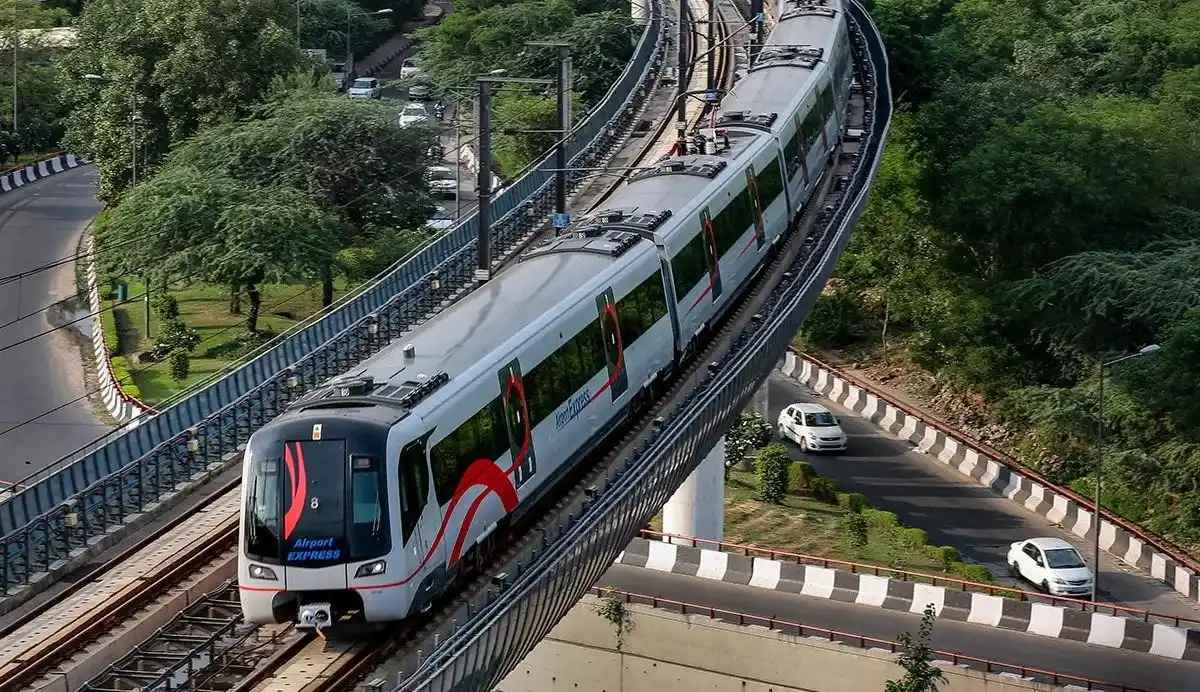
Image Source: Google
Challenges and Delays
| Aspect | Details |
|---|---|
| Land Acquisition | Delays in land acquisition for certain sections slowed down the initial construction process, especially in densely populated areas. |
| Environmental Clearances | Obtaining approvals for tree cutting, environmental impact assessments, and noise control caused project timeline extensions. |
| Funding Delays | Budget allocation and release of funds from various government bodies and funding agencies faced temporary slowdowns. |
| COVID-19 Impact | Construction activities were halted or slowed during pandemic lockdowns, leading to labor shortages and logistical disruptions. |
| Utility Shifting | Shifting of existing utilities like water pipelines, power cables, and sewage lines posed major technical and coordination challenges. |
| Traffic Management | Executing construction work in busy urban zones required strict traffic management, often leading to temporary road diversions and delays. |
Delhi Metro Phase IV Project – Latest Progress & Completion Timeline | Click to Download App Available On
Explore Properties in Delhi
- Builder Floors for Sale in New Ashok Nagar
- Builder Floors for Sale in Chhatarpur
- Builder Floors for Sale in Molar Band
- Builder Floors for Sale in Hari Nagar
- Builder Floors for Sale in Vikas Puri
- Builder Floors for Sale in Uttam Nagar
FAQs
Que: What is Delhi Metro Phase IV?
Ans: Delhi Metro Phase IV is the latest expansion of the Delhi Metro network, adding six new corridors and over 65 km of routes to improve connectivity across the city and NCR.
Que: When will Delhi Metro Phase IV be completed?
Ans: The first sections are expected to open by late 2025, with full project completion targeted for 2026, depending on construction progress and approvals.
Que: How many new stations are being built under Phase IV?
Ans: Over 45 new stations are being constructed across six corridors, including key interchange points like RK Ashram Marg, Aerocity, and Mukundpur.
Que: Which areas will benefit most from Delhi Metro Phase IV?
Ans: Areas such as Rithala, Bawana, Narela, Tughlakabad, Aerocity, and RK Ashram will see better connectivity and reduced travel times to other parts of Delhi.
Que: Who is funding the Delhi Metro Phase IV project?
Ans: The project is jointly funded by the Government of India, the Government of Delhi, and JICA (Japan International Cooperation Agency) through a soft loan.
Que: How will Phase IV impact the environment and city traffic?
Ans: By encouraging public transport use, the project aims to reduce air pollution, traffic congestion, and carbon emissions across Delhi.

India's Best Real Estate Housing App
Scan to Download the app

Download HexaHome app now.
Available on iOS & Android


Loved what you read? Share it with others!


Explore Properties for Sale in Delhi:
- Builder Floors for Sale in New Ashok Nagar Delhi
- Builder Floors for Sale in Chhatarpur Delhi
- Builder Floors for Sale in Molar Band Delhi
- Builder Floors for Sale in Hari Nagar Delhi
- Builder Floors for Sale in Vikas Puri Delhi
- Builder Floors for Sale in Uttam Nagar Delhi
- Apartments for Sale in Vasant Kunj Delhi
- Apartments for Sale in Kalkaji Delhi
- Apartments for Sale in Chandan Hola Delhi
- Apartments for Sale in Uttam Nagar Delhi
- Apartments for Sale in Chhatarpur Delhi
- House for Sale in Uttam Nagar Delhi
- House for Sale in Jharoda Kalan Delhi
- Retail Shop for Sale in Narela Delhi
Explore Properties for Rent in Delhi:
- Apartments for Rent in Saket Delhi
- Apartments for Rent in Lajpat Nagar Delhi
- Apartments for Rent in Vasant Kunj Delhi
- Apartments for Rent in Greater Kailash Delhi
- Apartments for Rent in Chhattarpur Enclave Phase I Delhi
- Apartments for Rent in Malviya Nagar Delhi
- Apartments for Rent in Chhatarpur Delhi
- Apartments for Rent in Chittaranjan Park Delhi
- Apartments for Rent in Kalkaji Delhi
- Apartments for Rent in Neb Sarai Delhi
- Builder Floors for Rent in Saket Delhi
- Builder Floors for Rent in Chhatarpur Delhi
- Builder Floors for Rent in Paschim Vihar Delhi
- Builder Floors for Rent in Neb Sarai Delhi
- Builder Floors for Rent in Mukherjee Nagar Delhi
- 1 Rk Studio for Rent in Mukherjee Nagar Delhi
- 1 Rk Studio for Rent in Mayur Vihar Phase 1 Delhi
- 1 Rk Studio for Rent in Guru Teg Bahadur Nagar Delhi
- Office Space for Rent in Saket Delhi
- Office Space for Rent in Janakpuri Delhi
- Office Space for Rent in Patel Nagar Delhi
- House for Rent in Laxmi Nagar Delhi
- House for Rent in Todapur Delhi
Explore PG’s for Rent in Delhi:
- PG’s for Rent in Dwarka Delhi
- PG’s for Rent in Karol Bagh Delhi
- PG’s for Rent in Saket Delhi
- PG’s for Rent in Greater Kailash Delhi
- PG’s for Rent in Kalkaji Delhi
- PG’s for Rent in Hari Nagar Ashram Delhi
- PG’s for Rent in Vikas Puri Delhi
- PG’s for Rent in New Mahavir Nagar Delhi
- PG’s for Rent in Gujranwala Town Delhi
- PG’s for Rent in Kotla Mubarakpur Delhi
Explore Co-living options in Delhi:
- Sharing Room/Flats in Saket Delhi
- Sharing Room/Flats in Kalkaji Delhi
- Sharing Room/Flats in Chhatarpur Delhi
- Sharing Room/Flats in Safdarjung Enclave Delhi
- Sharing Room/Flats in Guru Teg Bahadur Nagar Delhi
- Sharing Room/Flats in Chittaranjan Park Delhi
- Sharing Room/Flats in Vasant Kunj Delhi
- Sharing Room/Flats in South Ex 2 Delhi
- Sharing Room/Flats in East of Kailash Delhi
- Sharing Room/Flats in Sheikh Sarai Delhi
- Sharing Room/Flats in Rohini Delhi
- Sharing Room/Flats in East of Kailash Delhi
- Sharing Room/Flats in Greater Kailash Delhi
- Sharing Room/Flats in Saket Delhi
- Sharing Room/Flats in Kalkaji Delhi


Buy, Sell & Rent Properties – Download HexaHome App Now!

Find your perfect home, PG, or rental in just a few clicks.

Post your property at ₹0 cost and get genuine buyers & tenants fast
 Smart alerts & search helps you find homes that fit your budget.
Available on iOS & Android


A Product By Hexadecimal Software Pvt. Ltd.

Scan to Download our App
Available on iOS & Android – Download Now!
Loved what you read? Share it with others!